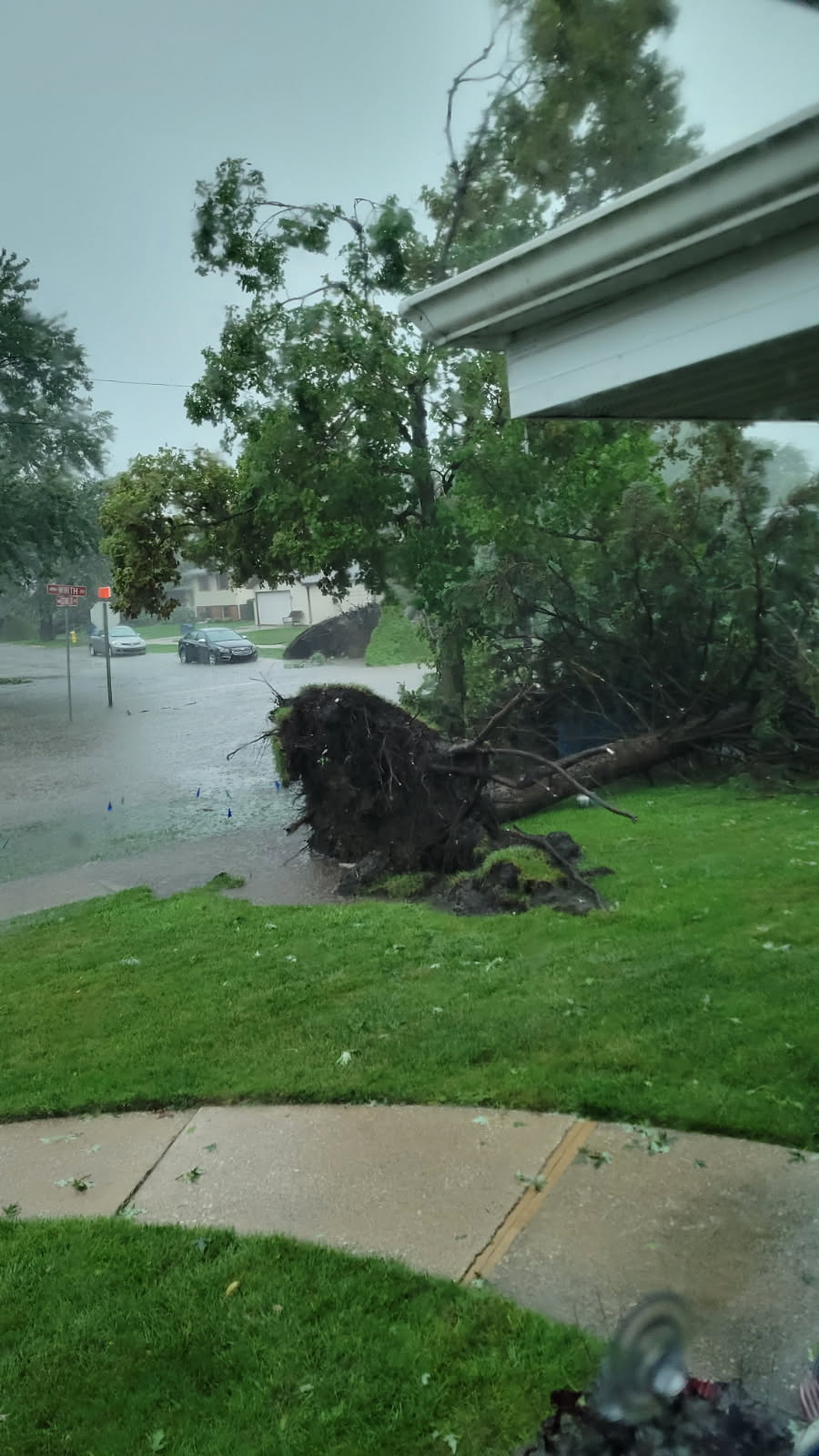
In the past three weeks the Chicago-land/Northwest Indiana area has experienced two storm systems, both of which generated 100mph winds. While there were many reports of tornadoes, what the storms resembled were brief (15 to 20-min) Category 2 hurricanes. I can attest to it, as I was in the middle of both while on the road working my day job.
Power outages stretched from the Southwestern suburbs of Chicago to the Eastern side of LaPorte, Co., IN, leaving over a million people in the dark, with trees and power lines blocking off large amounts of secondary roads. Many found themselves landlocked with no electricity – but, having occurred midday, there were also 100’s of thousands of people at work and facing an enormous task just finding a clear route home.
Traffic lights were certainly not in service, but it was also astonishing how many were actually not just unlit, but damaged or missing altogether.
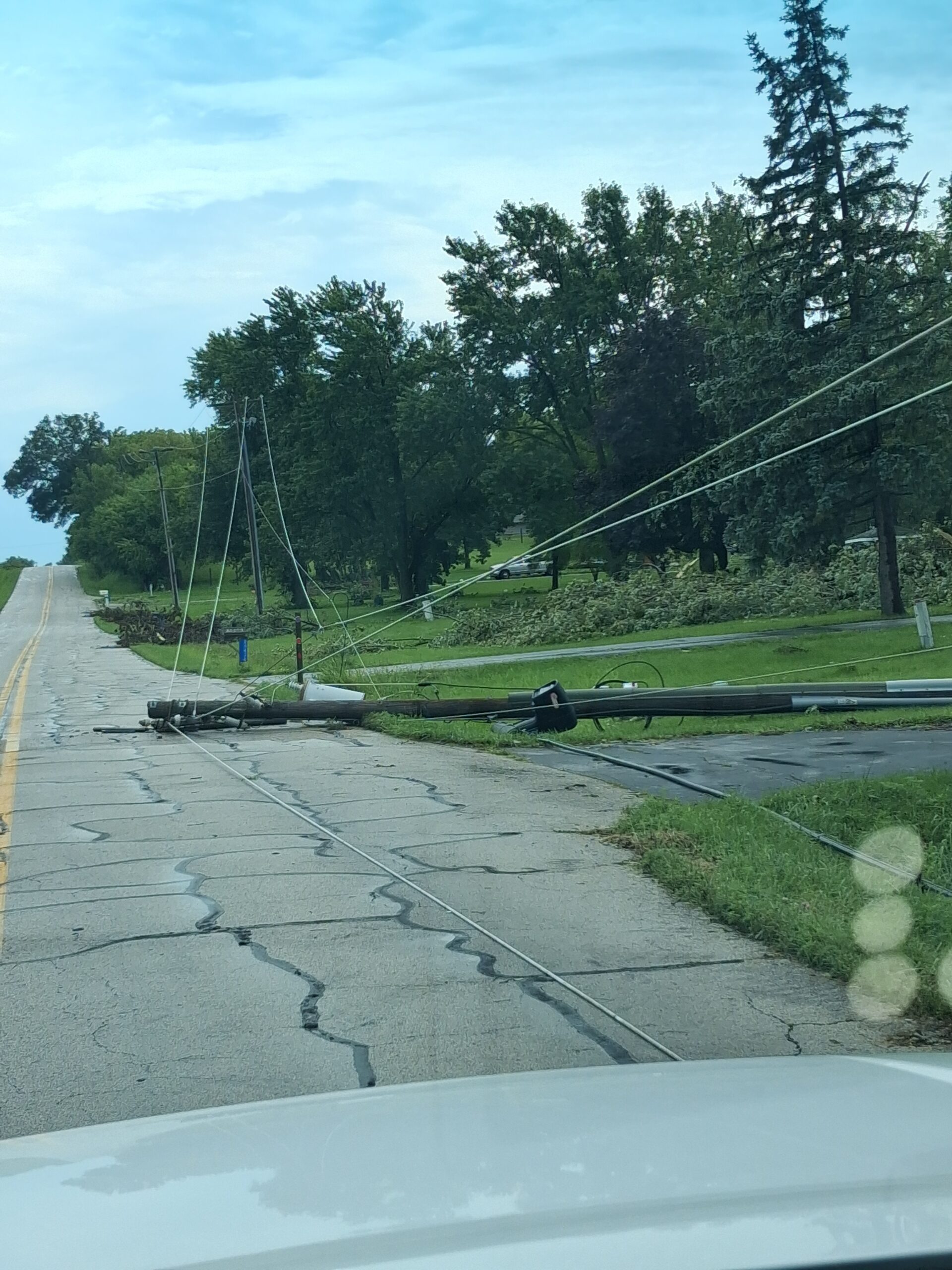
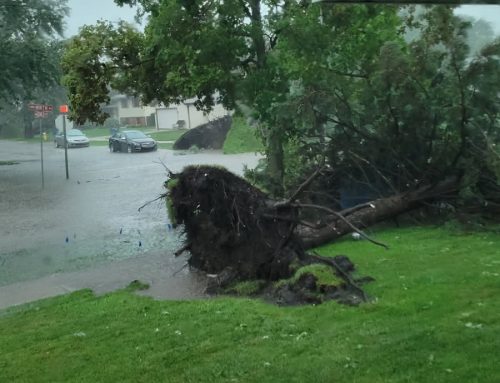
Wind sheered power poles off at the bases and uprooted trees from the ground during the storms.
Gasoline
Within 15 minutes of the storm passing, it became apparent how many people were driving on all but empty gas tanks. Stations were unable to sell fuel, but still had cars lined up at pumps with the engines off, doors open, and occupants sitting in them on their phones. The phenomenon became worse as the day rolled on and traffic increased. Many called for others to bring them fuel or give them a ride, others were simply abandoned overnight.
For the next 24 hours, Lake County only had a handful of gas stations open, resulting in 2 to 3 hour waits. In general, residents behaved themselves, but there were some minor temper flares/incidents reported to me by friends and students who had either witnessed them or knew people who had.
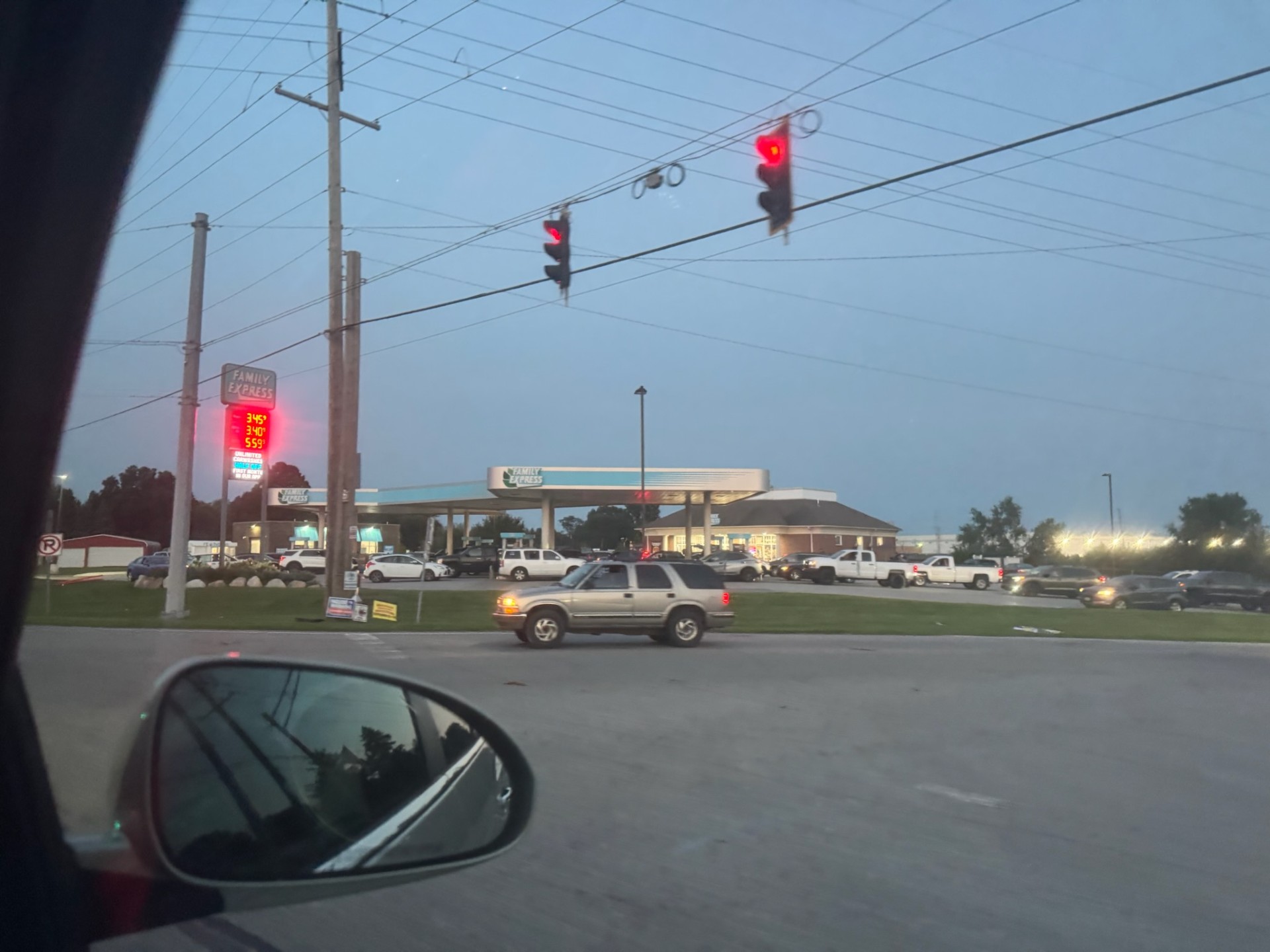
Lines were long at the stations on the outskirts of the storm damaged area, as well.
One gas station in the St. John, IN, area came back online a little over a day later. The owners posted rifle equipped family members in their lot as a preemptive measure for 48-hours until normalcy returned on a larger scale. They reported no problems for the duration.
At one of the few open stations, a friend noted that many had walked to the location and got in line holding gas cans. There was even a person who was in line holding an empty glass liquor bottle, hoping to fill it up!
All stations were out of regular by evening, leaving premium as the only choice.
Gas was available within a reasonable distance for most by day 2.
One friend relayed to me that his son works for a utility locating company which has a policy of only refueling their vehicles when gauges hit below an 1/8th tank and the driver hears the “ding” on the dashboard indicating the need to fill up. No reasonable explanation of this requirement was forthcoming, but I’m sure that there is corporate desk jockey working from home somewhere who thinks the implementation of it solved a problem so severe that they deserved a massive raise.
In the meantime, over half of the company employees were stranded at home without enough fuel to get somewhere gas was available, all while utility locating was at peak demand due to all of the tree removal and power pole replacement needed, and, yes, underground line damage that had just occurred.
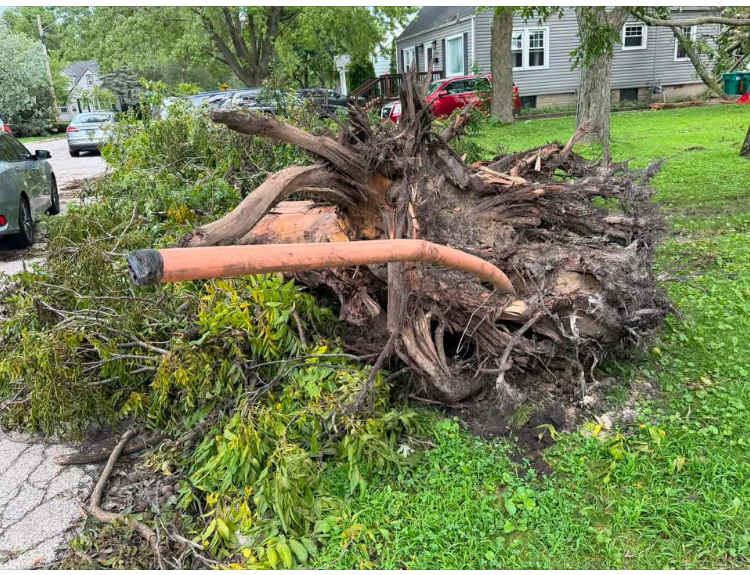
Tree fall that ripped out a gas main.
The same utility worker also mentioned that there was a station near their home base which was open, but their card readers were down, and no one at the office had any cash available for employees to fill up.
In the words of Forest Gump’s mother: Stupid is as stupid does.
Having a ½” oil resistant length of hose [5 feet] in the vehicle for siphoning is highly recommended. And, NO, we don’t suck fuel through the hose like Hollywood suggests. We stuff the hose all the way into the tank, place our thumb over the end, and pull that end out and down towards the ground. When the hose end with our thumb over it is below the level of the end submerged in the tank, we remove our thumb and gas will begin to flow.
Think of it like a finger over the top of a drinking straw and lifting it out of a full cup of soda.
The lower end of the hose will have to be kept lower than the fuel level of the siphoned tank in order to work, so transferring directly one vehicle to another is not possible as the fill cap is too high. Fuel will have to be captured in a container and then poured into the receiving tank.
We should all know how to do this! Ingesting gasoline into the mouth, and the fumes into the lungs, is not only unpleasant, but also extremely dangerous. (Aside from having the stench of spilled gas in our clothes for the duration.)
Yes, there are portable fuel transfer devices, but just like knowing how to start a fire with only a single method is short sighted, so is relying on a specialty device you may not have when hoses are everywhere.
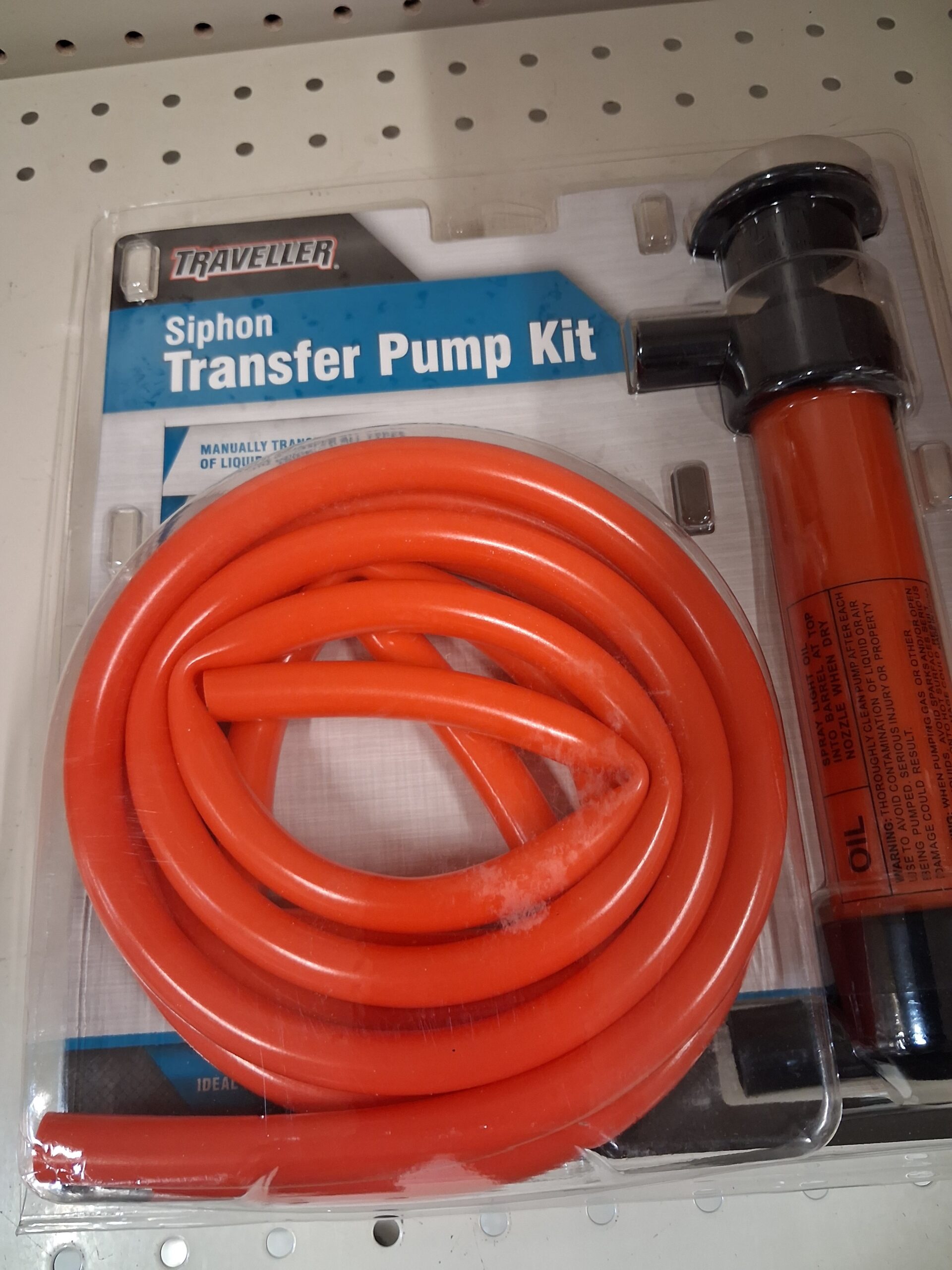
Lightweight transfer pump kits are available on-line and from auto parts and farm supply stores.
Drones
A report regarding locating fuel from a friend in a rural area presented a potential that we should all consider. His sons went on a quest for gasoline for their generator and as they approached a small town they pulled over and launched a drone. The aerial view saved them driving from station to station, and also gave them intel on how long the lines were. They ended up finding a station on the far side of a town that had yet to be inundated with a crowd. Their cans were filled in 10-minutes and they were on their way, avoiding the masses and the wait!
Another friend relays to me that a drone was used by a neighbor to assess roof damage for others, which allowed them to send video files immediately to their insurance companies.
A third person told me of how he used a drone to assess road blockages in the area, as well as flooding.
At this time there are drones at big box stores in the $300 price range that capture video and can be controlled by a cell phone. This is a preparedness asset that can no longer be ignored. Imagine the intel gathering they can provide during civil unrest – both in avoiding confrontation, and seeing it coming before it arrives.
Footwear
The vast majority of those seen milling around gas stations hoping they would suddenly be back in business were wearing flip flops, crocks, dress shoes, or, at best, sneakers. None were spotted with work/hiking boots, or anything waterproof that rode above the ankle.
Those forced to walk were in for a rude awakening!
Food
All restaurants closed their doors. One student, who was monitoring social media, texted me to report an insane amount of people posting (just hours after the storm) about how hungry they were and pleading for information on anyplace that was still open for business. It is truly amazing how so many don’t cook, depend on Doordash (and/or the drive thru), and don’t have an extra can of soup at home.
Most of the area grocery stores are equipped with large back-up generators to keep their freezers and coolers running to avoid spoilage. However, one store experienced a power surge from their generator which damaged ALL of their coolers. By evening, there was no produce or fresh meats to be had, there.
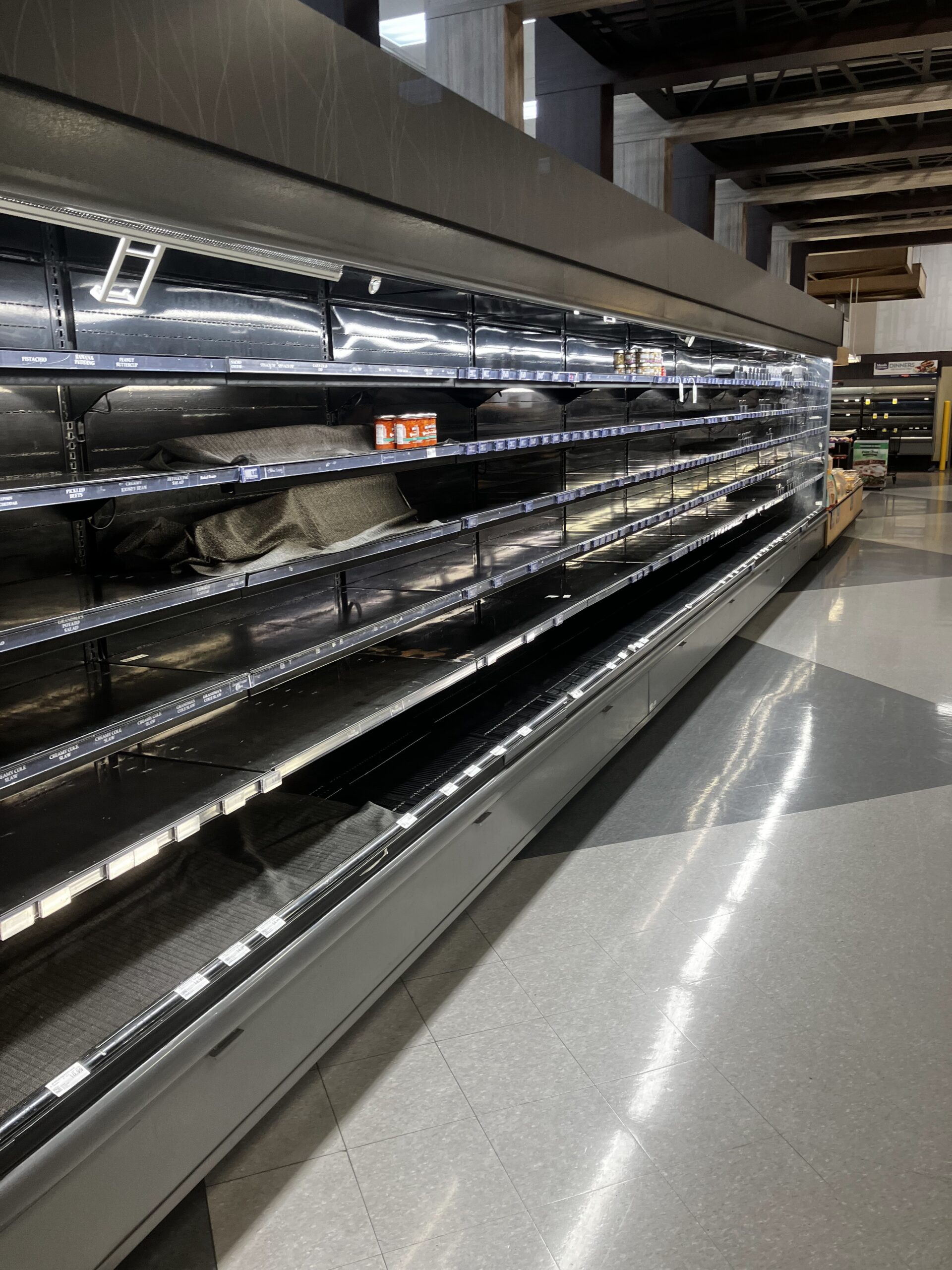
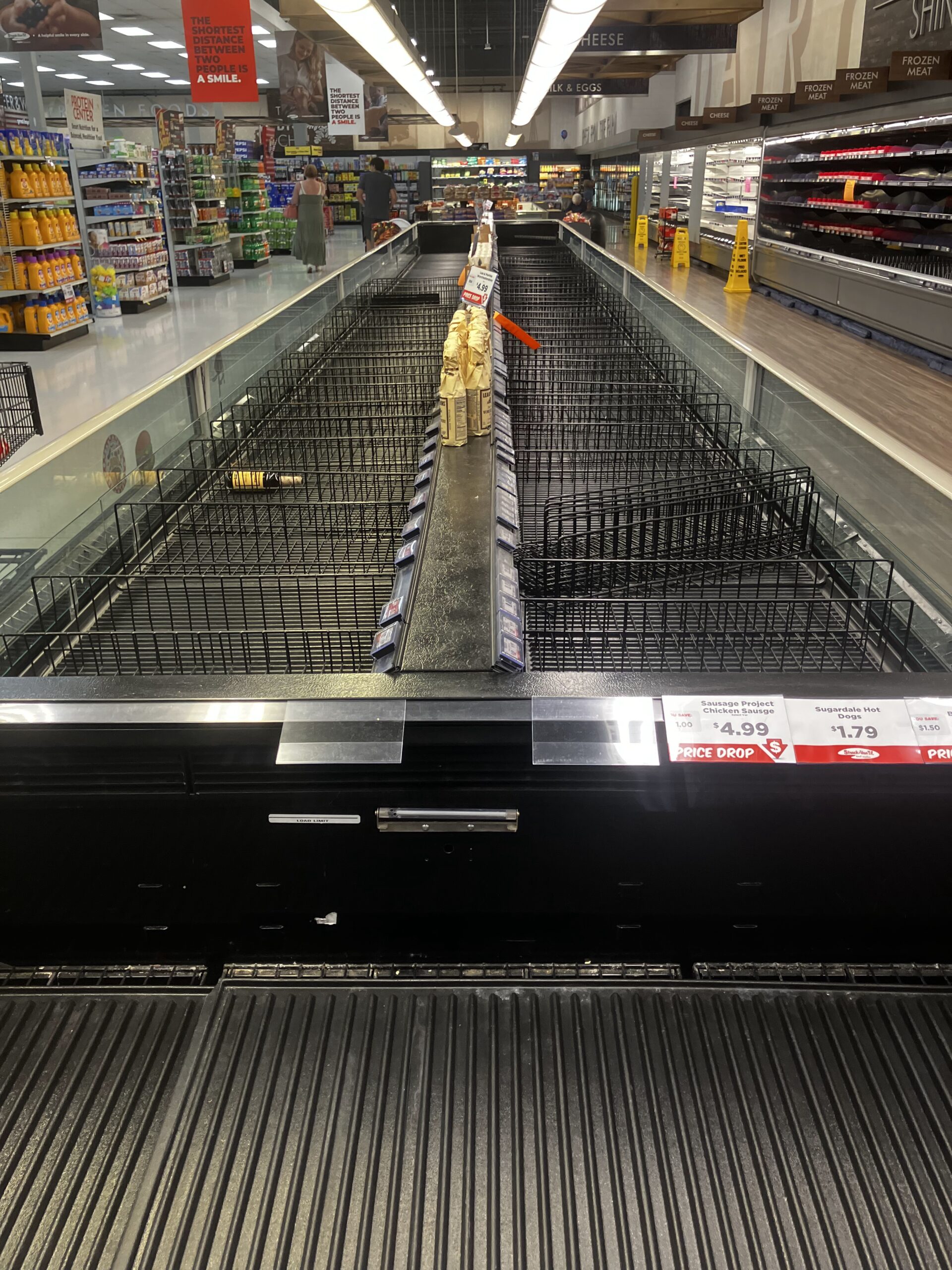
Every grocery store in the effected area was fighting to keep shelves stocked for three+ days, as there were no other alternatives for residents to acquire anything to eat. You could see how fatigued the staff were and how short-fused the patrons were.
And with the grid slowly being restored a little every day, the restaurants that opened 24, 48, and 72 hours later were equally overwhelmed.
Speaking of employees, many of the businesses that are now open are staffed by people who are located in areas still out of power. Many living in rural areas and lack backup power are unable to shower or wash clothes because their well pumps are off. This has put a strain on worker availability in this “all hands on deck” situation.
Sanitation
With all restaurants, stores, and gas stations closed, so were all the public bathrooms.
In the future, when 24 hours of such a condition exists without the ability to travel, we will see real problems.
Chainsaws
With almost every residence in the storm path experiencing some level of tree damage. The aftermath is not the time or place to try and purchase a saw or spare chains and parts. There wasn’t a saw to be found within 10 miles of the storm damage for the entire week afterwards.
Most of us will not have a chainsaw in our trunk during the next storm, but a handsaw is a great idea. Being able to cut even the lighter branches from the top of a downed tree may be enough to create enough space to pass by.
Generators
The same can be said for auxiliary power in the form of a generator. I spoke with a local Generac dealer who also installs and services such – on Thursday by 9am he’d already received 70 calls just that morning. However, he’s out of stock on everything, including spare parts for existing units.
If you didn’t already have it, you weren’t getting it anytime soon. As of now he’s 4 months out on installations on new orders.
Another generator issue which became rampant was FIRE. There are at least five published reports from local news sources of people being injured and/or structure fires occurring while hot generators were being refueled and gasoline was spilled on the exhaust manifold. In a true “help is not on the way” crisis, once the first structure goes up in a neighborhood, without red trucks and water pressure, the fire will spread to neighboring homes. Eventually, unbridled fires will be raging across cities and burbs. Have MANY fire extinguishers!
Those with whole house generators certainly fared well – most never experienced more than minor inconvenience. However, while I applaud those with such foresight, generators keeping the AC and lights on fail to teach us any lessons.
More than one person has told me that their families went on with life as usual, leaving them with a feeling of unease because a little hardship once in awhile is good for us. Especially we Americans who have become far too soft.
For those who have been trying to convince their progeny to prepare for crisis, having life continue through one without a hiccup only convinces them that “dad has it covered.”
Water
Those with government [municipal] water did not experience disruptions. Those with private wells could only use them with a generator or battery bank. However, during a protracted widespread crisis, potable water will quickly become a scarce resource.
We can’t store enough of it – literally!
Thus, we need to invest in gravity or pump-style water filtration devices. Everyone should have the ability to MAKE clean drinking water.
Communications
With the power out, many cell phone towers possess backup battery power for 24 to 48 hours. Two days into the event, many areas began to experience spotty cell coverage.
For neighborhood communications, family and GMRS radios will get the job done. Have plenty of spare batteries and multiple ways to charge them (vehicles, batter banks, solar, etc…)
Internet access via the Starlink Mini Kit, and satellite texting may be achieved through the Zoleo. Both are affordable options.
Final Thoughts
Over a week has passed since the storm and clean-up is ongoing – there is still about 10% of the affected area without power.
Hopefully, this will serve as a “wake up” to many with regard to disaster prep. But, I’m not counting on it. For the rest of us, go over lists, replace batteries, check supplies, rotate food stocks, fill gas cans, and get ready for winter.
Every member of the family needs an emergency bag in the vehicle when in transport. Imagining the chaos from roads blocked and congested from an EMP or software hack is not hard. We all need to be ready to abandon a vehicle and remove ourselves form the mob.
Car bag (or, commute bag) essentials:
Water filtration – Life Straw, etc…
Water container – Sports bottle, Canteen…already filled
Fire making – Matches, Lighter. Plus a candle or trioxane fuel, or other tinder, for assisting in lighting damp fuel
Blade/Multi-tool, and a glass breaker/seatbelt cutter
Space Blanket
Hand warmers/heat packs
Analog compass + hard copy maps (laminated)
Portable battery bank, like those by Anker, for recharging phones
Handheld flashlight + batteries (or cable to recharge off of battery bank), and a headlamp
Glow sticks
Spare underwear and socks
First aid kit, including wound trauma care components
Light rain jacket or poncho
Power/energy bars
Spare medications
At least $100 in cash – small bills, fives and ones.
Sharpie pen, ink pen, pencil, pocket notepad
Toilet Paper
Toiletries (travel size soap, toothbrush, toothpaste…)
Gloves
And all of us who are able should be traversing the Earth ARMED. When the balloon goes up, regardless of how temporary it may be, we get little warning.
Ready, or not, here it comes!
[Part II will be comprised of reports sent to me from friends and students.]