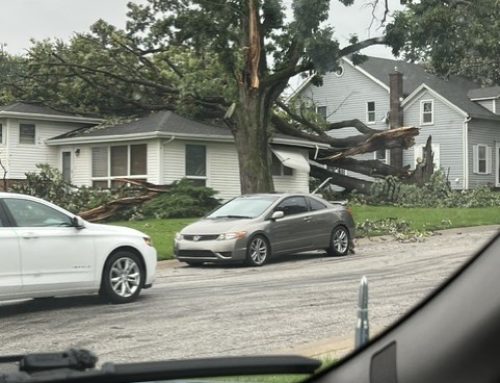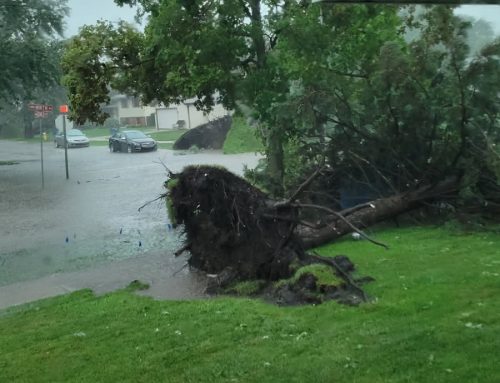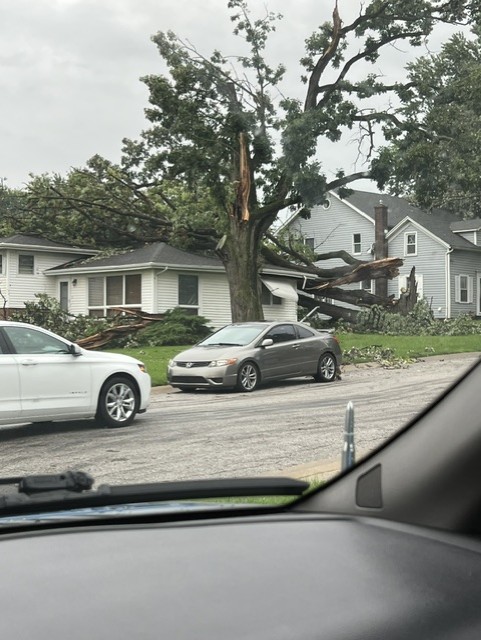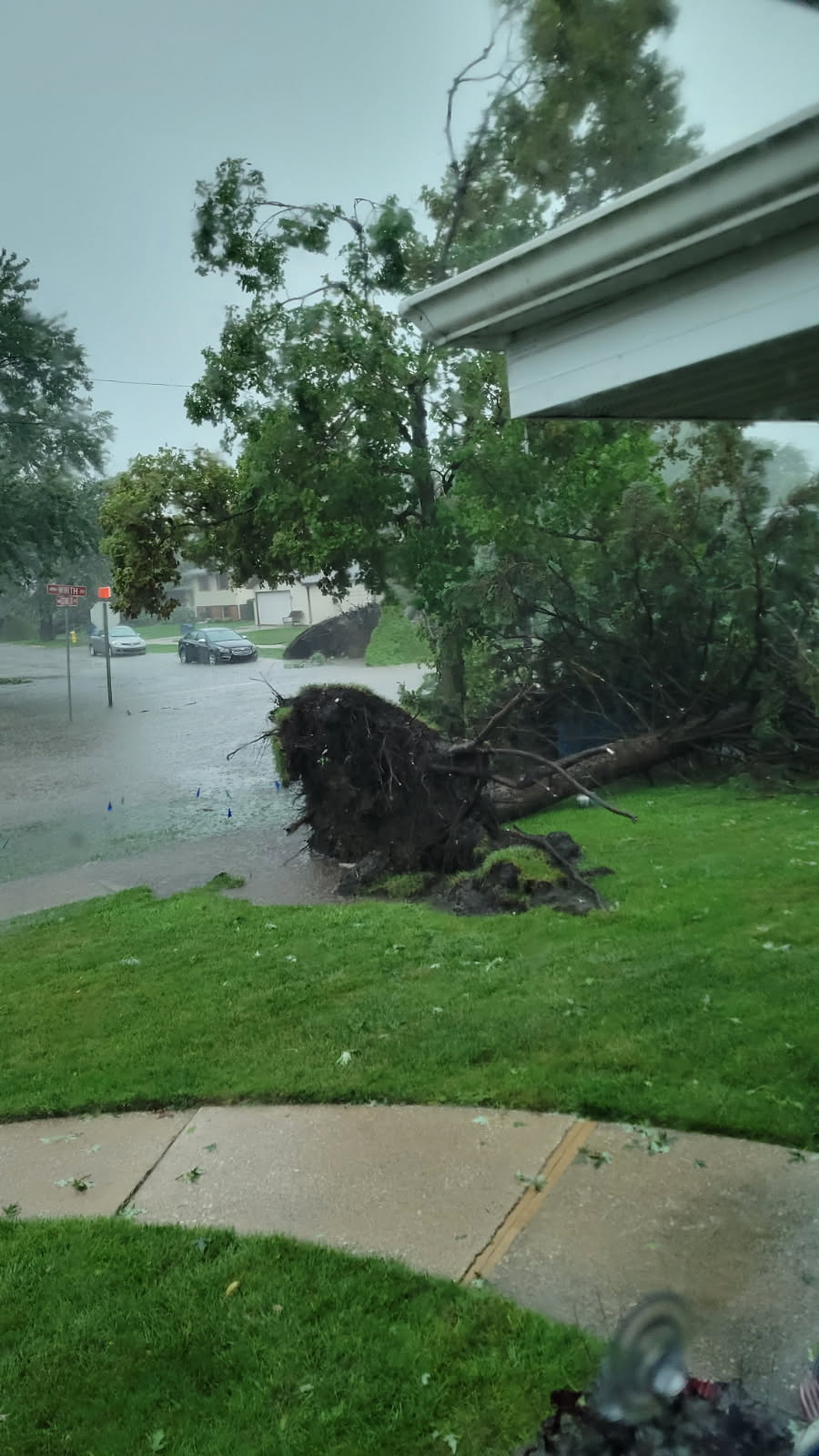
The following are notes and observations sent to me from a retired fire chief our our mailing list. My finial comments on the subject follow at the end. – Frank
1) Many lack common “outside the box” thinking skills. Online, within the first 24hrs, many people were complaining of lack of food because they couldn’t cook anything due to their gas stoves not working with the power out. None possessed the common sense to light it with a lighter or match to bypass the electric ignition.
2) When an emergency hits is NOT the time to try and find a generator, fuel or whatever else is needed. Not only were the stores closed and payment systems off, most roads to the stores were blocked. During a blizzard, even if travel is possible and stores are open, why risk the exposure to the elements when simple steps can be taken ahead of time?
3) There were multiple social media posts by people who were stuck at a big box store when the storms hit. Many indicated the employees locked them in the store and wouldn’t let them leave (which sounds like kidnapping/false imprisonment to me.) The LAST place I’d want to be locked inside of during a tornado/wind event is a big box store with truss roof construction and hundreds of pounds of HVAC equipment above my head. We had a saying in the fire department: “never trust a truss”. When one fails it’s like a domino effect, as all the others follow.
If stuck in such a building with no possible egress, I’d be looking for walk-in coolers or other sturdy places within the store. If egress is available, I’d take my chances on the outside. I definitely would not be hanging out in the open floor space at places like Costco/Menards/Home Depot with product stacked on racks all around me. It’s a death trap!
4) Don’t expect local first responders to be there. In the grand scheme of things, this storm affected a huge area. Most of those areas have relatively small fire departments with the very minimal staffing levels at best. We’re not talking City of Chicago levels of personnel. And many departments rely on volunteers who are usually located at a secondary location when the alert goes out.
While all have Mutual Aid Agreements in place with surrounding departments, it’s impossible to receive mutual aid when that department is affected as well. Additionally, the FD might have been directly impacted. Case in point, the Monee, IL, FD. Their Station 1 was damaged during the first storm a week before this storm. The second (recent) storm directly hit their Station 2. It’s hard to answer calls when you have to dig your own equipment out of debris, and it is hard to dig your own equipment out when your crew can’t get to the station!
5) Develop a resource list. People should have a list of companies/businesses on file whether hard copy or phone. Establish these contacts before you need them so that when you do call for service, they already know you. I had a roofer out within 24hrs, and a few new shingles installed for $100, plus a nice tip for the prompt service. They never did work for me prior, but I had reached out after the June storm and made the initial contact. They remembered, and took care of me!
6) As some people are learning, cell phones/internet will go down. My son was a telecommunications tower climber, and as he will confirm, most of the towers do NOT have emergency generators. They rely on battery back-up which is only good for 24-36hrs (that’s if the batteries are properly maintained). Once those fail, the tower is out until power is restored or they take a gas generator to the site. Then that generator will have to be checked and refilled. And considering the lines we saw at gas stations, that seems like a pipe dream with a large-scale event. Have a comms plan with family/friends ahead of time in case the phones are down.
7) Keep your gas tanks full (above 3/4) at all times. We heard the stories and saw the lines. Some were waiting for 2hrs in line after having to drive an hour to find a station open. Store extra gas at home (where safe to do so.) Have spare cans and a way to transfer fuel into those containers.
8) Be prepared for price gouging. One of our local stations raised their price to $4gal once they had power back. The one directly across the street was $3.17gal.
Some stations also were only selling premium (were they out of the regular unleaded or ?)
9) Railroad crossings gates take their power from the grid. When the grid fails the gates are powered by backup batteries until they fail or the grid is restored. These are located in the metal sheds in close proximity to the crossing.
If the grid is not back up and the batteries die they will fail safe into the down position even if a train isn’t present.
10) Maintain situational awareness even more. A distant relative of mine lives alone in nice neighborhood where the power was out. The weather was warm, so she had every door and window open, including her garage door and door from the garage leading into the house. I went to check on her and was able to walk right in, where I then found her napping in the back bedroom. She was completely oblivious to the risk she had exposed herself to.
I was not happy! I understand her intentions, however, just because the neighborhood is “safe” now doesn’t mean it will continue to be in a crisis.
11) Fire extinguishers! You can’t have enough of them!
When half a state is out of power for a prolonged event, with road closures and city water system failures a part of it, once structure fires start near other structures, entire neighborhoods will go up. We have to be able to contain the small fires on our own before they become big fires!
Check your extinguishers for expiration, and have them refilled, regularly!
12) Our society (most of it) lives in the moment expecting everything “now”, and are unable to think beyond themselves. Most have no emergency plan, food on hand, or other provisions that may be needed for an extended duration. FEMA / DHS always told us to “expect to be on your own for at least 72hrs” with no massive mutual aid. This storm proved that for once government is giving sage advice as the land mass encompassed was massive – had the damage have been worse, FEMA would simply not be able to respond on a large enough scale, or fast enough to maintain order.
Frank’s Comments
Our entire society is built on extremely fragile and complex systems which require smart, hardworking people to maintain and repair. And the smart, hardworking people are slowly being replaced with dimwitted, fat, lazy leaches, who posses a propensity towards violence. And, no, artificial intelligence and robotics will not solve the problem. What it translates to (as always) is: WE ARE ON OUR OWN.
The storms were only a few weeks ago, but to most they are ancient history. Remnants of the destruction can still be observed, and there are piles of brush and trees that have yet to be collected, but the majority have gone on with their lives without giving second thought to preparing for the next event.
“There are only nine meals between mankind and anarchy.” – Alfred Henry Lewis, 1906
Alfred Lewis’ point has been quoted ad nauseam by every purveyor of self-reliance since. However, personal experience has taught me that the three days Lewis gave society may have been applicable in 1906, but in 2026 it is incredibly optimistic. Today, should the lights go out nationally, it will only be a matter of hours.
If we were still a society of rugged individuals with a strong moral base, then perhaps we would fare better. But, we’re not. America is just not made of the same stuff it was 100+ years ago.
It is also highly unlikely that any local, state, or federal agency, including the military, will remain cohesive and “combat effective.” Law enforcement officers, National Guard, and US Military personnel will go AWOL en mas in order to get to their own families. Yes, some will stay at their posts, but enough will vacate to cause a complete breakdown of institutional capabilities.
The military may have some long-term storage of fuel, food, and supplies, that will keep it somewhat operational for the initial first weeks. But, eventually, once those supplies start to run low and it becomes obvious that there will be no “return to normalcy”, the enlisted, and most officers, will decide to go find something else to do. As for local law enforcement, it will immediately dissolve as officers fail to show up for shift. Of course, that will also be a cause and effect of communications being severed. When the radios and phones cease to work, carrier pigeons will not be ready to serve as a stopgap. It will all be amplified by the absence of paychecks and banks to cash them at. No pay = no work.
The survival instincts of all involved will immediately kick in, and manifest in their most basic forms.
The alphas will seize power, using whatever means necessary. Meaning, criminals (both street level and government), will not hesitate to inflict violence and make examples to maintain their dominance over all those in their sphere of influence. What supplies exist will be confiscated by their minions, to be distributed (in meager amounts) to those who are disarmed and obedient.
Those in doubt of this reality would do themselves a service by studying history and developing an understanding of the violent capabilities humans possess. When the first self-proclaimed “leader” places a severed head on a pike, neighbors will not hesitate to turn on neighbors. We all tend to overestimate our tolerance for pain and discomfort, as well as our fortitude to stand up against evil – especially evil wielding superior strength and numbers. When faced with such a choice, few have ever taken the “high road.”
It is my most sincere prayer that such a turn of events never occurs in America and we’re not forced into that corner. I’m betting we won’t, at least in my lifetime. However…
In the interim, we should all be prepared to stay for a week exactly where we are at any given time. Work, home, in our car, etc… Preparing for “the Apocalypse” is not possible, nor is it a good use of time and resources. But being equipped to ride out a snowstorm, hurricane, or extended, localized power outage is well within the average American’s budget and abilities.
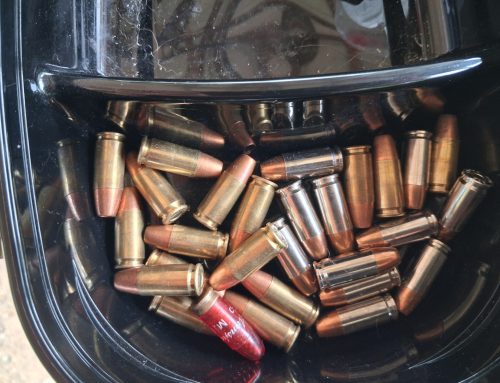
We can also learn serious defensive shooting skills and carry guns daily. When evil visits, it is much easier to tell it no when equipped with the tools and skills to back that statement up.
The wise will do so!